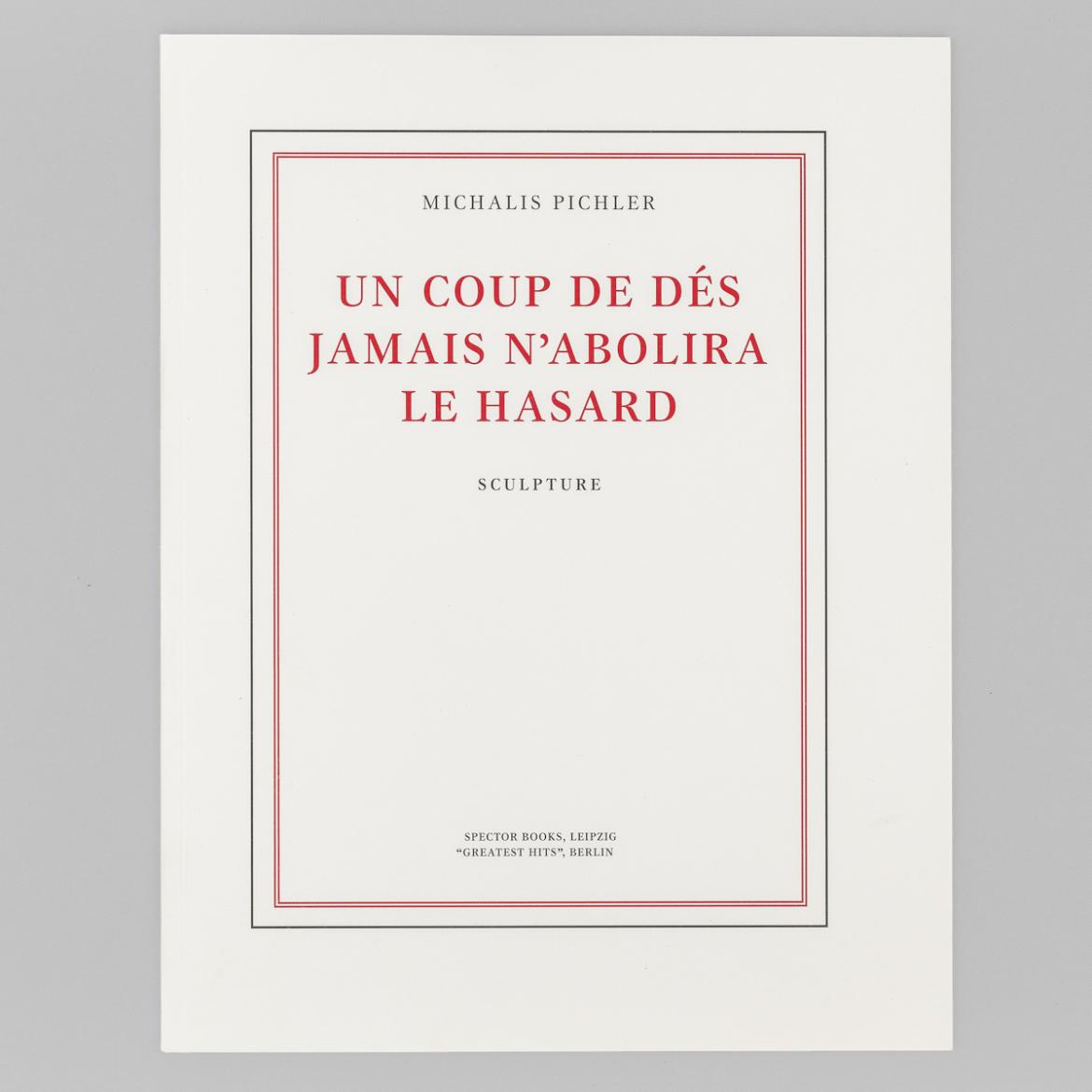
In an art critical context, it does not make sense to seek a lineage in what we categorize as “appropriation art” that predates Marcel Duchamp’s readymade gesture. Dating here is an issue, as it’s not possible to see this gesture as having been understood prior to Duchamp’s Pasadena show in 1963. But dating aside, there is no need for confusion, for it is possible to be very clear: appropriation is not simply the borrowing of a style.
**OPENING: May 11th, 7 pm. Performances 8.30 pm - open end
a cura di Emanuele De Donno/Giorgio Maffei
progetto di VIAINDUSTRIAE / STUDIO A’ 87
mostra / apertura: sabato 14 aprile 2012 ore 16.00
presso Palazzo Trinci, piazza della Repubblica, Foligno
durata mostra: 14 aprile | 20 maggio 2012
libri-progetti di • a constructed world • A/traverso/Bifo • Maia Asshaq/Danielle Aubert • Lisa Anne Auerbach • Darren Bader • Dave Hullfish Bailey • Lothar Baumgarten • Bernadette corporation • Andreas Broeckmann/Knowbotic Research • Joseph Beuys • Luther Blisset • John Cage • Giuseppe Chiari • Continuous Project • Critical Art Ensemble • Koenraad Dedobbeleer • Jeremy Deller • Nico Dockx • Eric Doeringer • eclectic electric collective • Cvedet Erek • Matias Faldbakken • Fillip 16 • Ryan Gander/Stuart Bailey • Jochen Gerz • Gilbert & George • Liam Gillick • Dan Graham • Agnieszka Grodzinska • Hans Haacke • Thomas Hirschhorn • Joe Jones • Brian Kennon • Ben Kinmont • Information as Material • Institute for Applied Autonomy • Junk Jet • Sol LeWitt • Armin Linke • Max Malandrino • Anthony McCall&Andrew Tyndall • Aleksandra Mir • Jonathan Monk • Antoni Muntadas • Maurizio Nannucci • Carsten Nicolai • Katja Novitzkova • Seth Price • Primary Information • Michalis Pichler • Linda Pollack • Richard Prince • Publication Studio • random press • Yann Serandour • Serving Library • Strano network • Superflex • Temporary Services • The Institute of Social Hypocrisy • Wolfgang Tillmans • tiqqun • Tommaso Tozzi • Jalal Toufic • UFO • Ultrared • Vague • Danja Vasiliev/Gordan Savicic • Stephen Willats • 80*81
Dear All/Queridos todos/Cari tutti,
Crux Desperationis 2 Mental Issue, An Index of Potencial Works is downloadable here:
Crux Desperationis 2 Número mental. Un índice de obras potenciales se puede descargar aquí:
Crux Desperationis 2 Numero mentale. Un indice di opere potenziali si può scaricare qui:
featuring
CRAIG DWORKIN
Inscience
An autobiographical work recounting everything you can remember learning,
composed exclusively from the words you do not know (there are probably about
200,000 for a college-educated English speaker). Articles and prepositions exempted.
You may use a dictionary.
RICHARD KOSTELANETZ
The beginning of the system of lies (J'ai le mouvement qui déplace les lignes)
Exposition littéraire autour de Stirner et Baudelaire
01.03.2012 – 25.03.2012
„Es kommt mir so vor, daß die Signatur des Autors, sei er nun Künstler, Cineast oder Dichter, der Anfang des Systems von Lügen zu sein scheint, das alle Dichter, alle Künstler einzurichten versuchen, um sich zu verteidigen, ich weiß nicht genau gegen was.“ Marcel Broodthaers
Das Gespinst von Lügen rund um die Signatur des Künstlers beginnt in den Straßen des vierten Bezirks. Poster kleben an virulenten Punkten in mehreren Straßen (Wiedner Hauptstraße, Schleifmühlgasse, Kettenbrückengasse, Naschmarkt…) und funktionieren wie Satelliten der Ausstellung. Ein Referenznetz wie es für Pichlers Werk charakteristisch ist. Die Signatur ist das fragwürdige Markenzeichen des Individuums. Bei einem Künstler steht die Unterschrift sogar in direktem Zusammenhang mit einem materiellen Wert. Ähnlich wie die Marken von Kleidung, Autos und Schmuck, die den öffentlichen Raum so dominieren?
Main Gallery
1008 Wall Street, La Jolla, CA 92037
Recent Acquisitions
On view February 18-March 24, 2012
Opening Reception, Friday, February 17, 6:30 - 8:30 PM
Free Admission
No problem = No problème: Albert Oehlen, Martin Kippenberger
Definitions, David Antin
Being Antinova, Eleanor Antin
Eleanora Antinova plays, Eleanor Antin
Brutus killed Caesar, John Baldessari
Fable, John Baldessari
Throwing three balls in the air to get a straight line, John Baldessari
Rossicontemporary, Brussels, 3.12.11 - 21.01.12
Opening Saturday 3 December, 3-7 PM
MISS READ
25. – 27.11.2011
Opening Party in Café Bravo: Friday, 25.11.2011, 6–12 pm
Opening hours
Friday, 25.11.2011, 3–9 pm
Saturday, 26.11.2011, 3–9 pm
Sunday, 27.11.2011, 12–7 pm
1. Conceptual readers are mystics rather than rationalists. They leap to conclusions that logic cannot reach.
2. Rational judgements repeat rational judgements.
3. Irrational judgements lead to new experience.
4. Formal reading is essentially rational.
5. Irrational thoughts should be followed absolutely and logically.
6. If the reader changes his/her mind midway through the execution of the piece he/she compromises the result and repeats past results.
7. The reader's will is secondary to the process he/she initiates from idea to completion. His/Her wilfulness may only be ego.
8. When words such as decoding and comprehension are used, they connote a whole tradition and imply a consequent acceptance of this tradition, thus placing limitations on the reader who would be reluctant to make reading that goes beyond the limitations.
9. The concept and idea are different. The former implies a general direction while the latter is the component. Ideas implement the concept.
10. Ideas can be works of reading; they are in a chain of development that may eventually find some form. All ideas need not be made physical.
11. Ideas do not necessarily proceed in logical order. They may set one off in unexpected directions, but an idea must necessarily be completed in the mind before the next one is formed.
12. For each work of reading that becomes physical there are many variations that do not.
13. A work of reading may be understood as a conductor from the reader's mind to the writer's. But it may never reach the writer, or it may never leave the reader's mind.
14. The words of one reader to another may induce an idea chain, if they share the same concept.
15. Since no form is intrinsically superior to another, the reader may use any form, from an expression of words (read or heard) to physical reality, equally.
16. If images are used, and they proceed from ideas about literature, then they are literature and (not) art; numbers are (not) mathematics.
17. All ideas are reading if they are concerned with reading and fall within the conventions of reading.
18. One usually understands the reading of the past by applying the convention of the present, thus misunderstanding the reading of the past.
19. The conventions of reading are altered by works of reading.
20. Successful reading changes our understanding of the conventions by altering our perceptions.
21. Perception of ideas leads to new ideas.
22. The reader cannot imagine his/her reading, and cannot perceive it until it is complete.
23. The reader may misperceive (understand it differently from the reader) a work of reading but still be set off in his/her own chain of thought by that misconstrual.
24. Perception is subjective.
25. The reader may not necessarily understand his/her own reading. His/Her perception is neither better nor worse than that of others.
26. A reader may perceive the reading of others better than his/her own.
27. The concept of a work of reading may involve the matter of the piece or the process in which it is made.
28. Once the idea of the piece is established in the reader's mind and the final form is decided, the process is carried out blindly. There are many side effects that the reader cannot imagine. These may be used as ideas for new works.
29. The process is mechanical and should not be tampered with. It should run its course.
30. There are many elements involved in a work of reading. The most important are the most obvious.
31. If a reader uses the same form in a group of works, and changes the material, one would assume the reader's concept involved the material.
32. Banal ideas cannot be rescued by beautiful execution.
33. It is difficult to bungle a good idea.
34. When a reader learns his/her craft too well he/she makes slick reading.
35. These sentences comment on reading, but are (not) reading.
Michalis Pichler
THE VANITY PROJECT
(ed.) Brad Downey
140 x 225 mm
150 pages
Cover : Paperback, color, glossy finish
Binding : glue bound
Interior : black-and-white
Edition of 250 books
Brad Downey invited people to create portraits of himself . These he has collected for this book, and they come from a wide spectrum of art practitioners, including sculptors, painters, authors, filmmakers, curators, graffiti artists and musicians.